Carnivoran Evolution
Anjali Goswami, Anthony Friscia
₹4,808

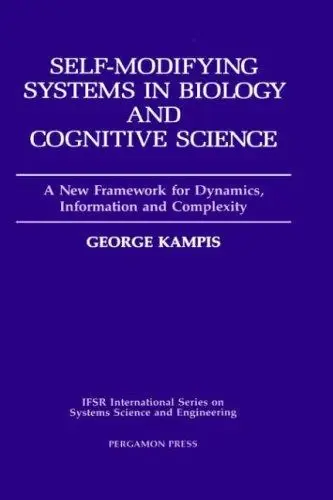
A New Framework for Dynamics, Information, and Complexity
by G. Kampis
Pergamon Press · 1991
Free delivery. Nothing extra to pay at checkout.
Offer
Use code GIG9 at checkout and pay ₹3,645 for this book (save ₹361).
9% off every book, up to ₹500 off per order.
<h2>Introduction</h2><p>In the vast and intricate landscape of scientific inquiry, few works dare to challenge the foundational assumptions of how we model life, mind, and complexity. <strong>Self-Modifying Systems in Biology and Cognitive Science: A New Framework for Dynamics, Information and Complexity</strong> by G. Kampis is one such landmark volume. Published by Pergamon in a sturdy hardcover edition, this book offers a radical rethinking of systems theory, blending mathematics, philosophy, and natural science. For Indian students and researchers delving into the frontiers of theoretical biology, cognitive science, and complex systems, this text is an indispensable intellectual companion.</p><h2>Book Overview</h2><p>This book is not merely a technical treatise; it is a philosophical and mathematical exploration of how systems—biological, cognitive, and computational—can generate new information by altering their own internal structures. Kampis argues that traditional models, which treat systems as fixed and static, fail to capture the essence of living and thinking entities. Instead, he proposes a framework where systems are <strong>self-modifying</strong>, meaning their very identity changes over time through internal dynamics. This shift has profound implications for understanding evolution, cognition, and the nature of reality itself.</p><h2>Key Highlights</h2><ul><li><strong>Original Framework:</strong> Introduces a new organizational principle based on internal semantic relations within systems.</li><li><strong>Interdisciplinary Scope:</strong> Bridges biology, cognitive science, mathematics, and philosophy.</li><li><strong>Mathematical Rigour:</strong> Discusses Turing machines, input-output systems, synergetic systems, and nonlinear dynamics.</li><li><strong>Conceptual Depth:</strong> Offers a fresh perspective on information as a self-generated, dynamic entity.</li><li><strong>Critical Analysis:</strong> Compares and contrasts existing system theories with the proposed self-modifying paradigm.</li></ul><h2>Inside the Book</h2><p>The book is structured to guide the reader from foundational concepts to advanced implications. Early chapters lay the groundwork by examining classical systems theory and its limitations. Kampis then systematically introduces the idea of self-modification, using logical and mathematical tools to demonstrate how systems can change their own rules. Later chapters explore the consequences for information theory, complexity, and the philosophy of science. Each section is rich with examples from biology (such as cellular processes and evolutionary dynamics) and cognitive science (including perception, memory, and learning).</p><h2>Key Topics</h2><ul><li>Self-modification and identity change in mathematical systems</li><li>Information as a product of internal system dynamics</li><li>Comparison of Turing machines, input-output models, and synergetic systems</li><li>Nonlinear dynamics and complexity in biological and cognitive contexts</li><li>The role of semantic relations in shaping system behaviour</li><li>Philosophical implications for realism and representation</li></ul><h2>Reader Benefits</h2><ul><li><strong>Deepen Your Understanding:</strong> Gain a novel perspective on how living and cognitive systems operate beyond mechanistic models.</li><li><strong>Enhance Research:</strong> Equip yourself with a conceptual toolkit for studying complex adaptive systems.</li><li><strong>Bridge Disciplines:</strong> Connect insights from biology, cognitive science, and mathematics in a unified framework.</li><li><strong>Challenge Assumptions:</strong> Question the foundations of information theory and system modelling.</li><li><strong>Expand Your Library:</strong> Own a rare, hardcover edition from a respected academic publisher.</li></ul><h2>Learning Outcomes</h2><p>By engaging with this book, readers will be able to: explain why biological and cognitive systems exhibit identity changes; analyse different classes of systems (Turing machines, nonlinear dynamics, etc.) and their limitations; articulate a new conception of information as self-generated; apply the self-modifying framework to real-world phenomena; and critically evaluate the relationship between mathematical representations and natural reality.</p><h2>Who Should Read</h2><p>This book is ideal for advanced undergraduate and postgraduate students in biology, cognitive science, philosophy of science, and mathematics. Researchers in complex systems, theoretical biology, artificial life, and epistemology will find it invaluable. It also appeals to curious minds interested in the deep questions of how life and mind create order and meaning. Indian academics and scholars looking for a challenging yet rewarding read will appreciate its rigorous yet accessible style.</p><h2>About the Author</h2><p>G. Kampis is a distinguished scholar known for his interdisciplinary work at the intersection of biology, cognitive science, and philosophy. With a background in theoretical biology and systems theory, Kampis has contributed significantly to the understanding of self-organization and information dynamics. His research has influenced fields ranging from evolutionary theory to artificial intelligence, making him a respected voice in the international scientific community.</p><h2>About the Publisher</h2><p>Pergamon, an imprint with a long and storied history in academic publishing, is renowned for its high-quality scientific and technical books. Based in the United Kingdom, Pergamon has been a trusted name for decades, offering rigorous, peer-reviewed content across the sciences. This hardcover edition reflects the publisher's commitment to durability and scholarly excellence.</p><h2>Conclusion</h2><p><strong>Self-Modifying Systems in Biology and Cognitive Science</strong> is not just a book; it is an invitation to rethink the very fabric of reality as we model it. For Indian readers who seek to go beyond conventional textbooks and engage with cutting-edge ideas, this volume is a treasure. Whether you are a student, researcher, or lifelong learner, Kampis's work will challenge your intellect and expand your horizons. Order your copy today from BooksBajar.com and add a truly transformative text to your collection.</p>
Anjali Goswami, Anthony Friscia
₹4,808

K. v. Frisch, R. Goldschmidt, W. Ruhland
₹3,508

Brian Morton
₹5,781

D. F. Westlake, A. Szczepanski, J. Kvet
₹5,074

Aulay MacKenzie
₹2,088
Dunbar, Robin
₹998

Martin Lukac, Douglas L. Godbold
₹3,951
Bonnie Berger
₹4,076

William R. Stoeger SJ, Nancey Murphy
₹4,329

John A. Wiens, H. J. B. Birks, J. A. Wiens
₹4,402
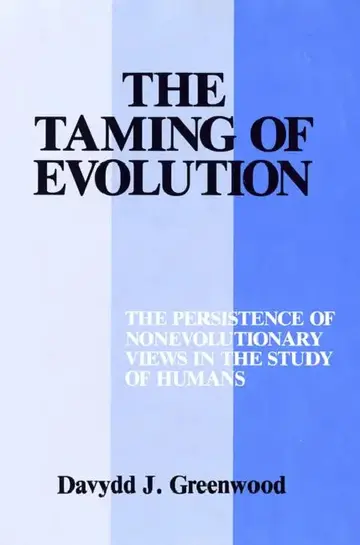
Davydd Greenwood
₹4,266

F. Stuart III Chapin, M. C. Chapin, Pamela A. Matson
₹4,620