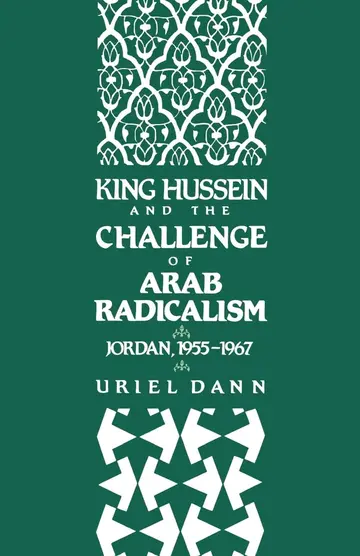
King Hussein and the Challenge of Arab Radicalism
Uriel Dann
₹7,802


by Uriel Dann
Oxford University Press Inc · 1989
Historian Uriel Dann examines the formative years of the Jordanian state under King Hussein, and why the monarchy survived pan-Arab radicalism. Aimed at readers of Middle Eastern politics.
Free delivery. Nothing extra to pay at checkout.
Offer
Use code GIG9 at checkout and pay ₹3,363 for this book (save ₹333).
9% off every book, up to ₹500 off per order.
When Hussein took the throne in 1953, the prevailing view was that he would not last long. As the head of a socially conservative, pro-Western state, he seemed poorly placed to resist the rising forces of pan-Arab radicalism. Yet the monarchy endured and has continued to play a vital role in Middle Eastern politics.
Uriel Dann explores the political history of the formative years of the Jordanian state, from 1955 to 1967. He uncovers the sources of its durability against forces that sought to change the traditional bases of Arab politics. The book is a study of how one monarchy held its ground in a turbulent region.
It is part of the Studies in Middle Eastern History series and will interest historians and students of Middle Eastern politics.
Uriel Dann
₹7,802
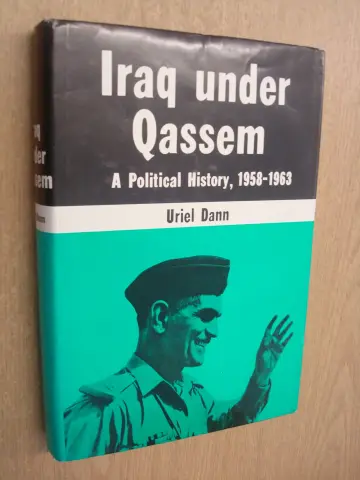
Uriel Dann
₹3,853
Uriel Dann
₹13,590

Jennifer Powell Mcnutt
₹1,695

J. Aaron Simmons, Bruce Ellis Benson
₹15,612
Russell T. McCutcheon
₹2,895

Kenneth Williford
₹16,959

Daniel Boyarin
₹2,024

Joshua B. Davis
₹3,894

Petrus Van Mastricht
₹6,408

Tom Hoopes
₹3,090

James R. Hoffer
₹2,218