
Progress in Drug Research
Balawant S. Joshi, Pushkar N. Kaul, E. Domingo, A. Mas, E. Yuste, N. Pariente, S. Sierra, M. Gutiérrez-Rivas, L. Menéndez-Arias, Doreen Ma, Chaman Lal Kaul, Poduri Ramarao, Jay A. Glasel
₹10,105

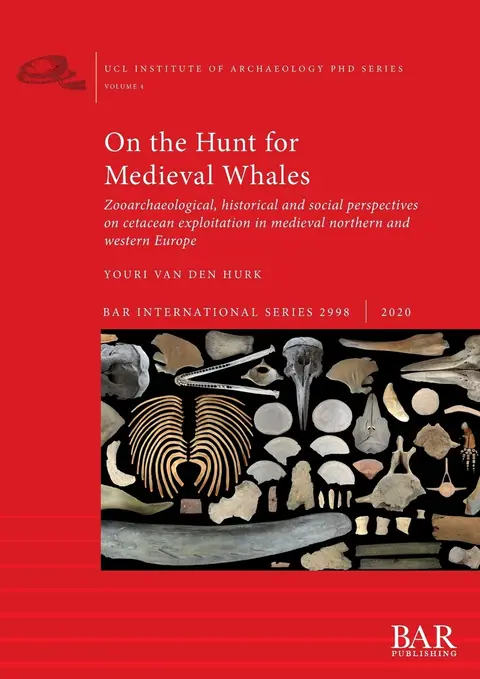
Zooarchaeological
BAR Publishing · 2020
A zooarchaeological study of cetacean exploitation in medieval northern and western Europe, covering whales, dolphins and porpoises. Written for archaeologists and historians of the period.
Free delivery. Nothing extra to pay at checkout.
Offer
Use code GIG9 at checkout and pay ₹8,788 for this book (save ₹500).
9% off every book, up to ₹500 off per order.
Medieval people in northern and western Europe hunted and ate whales, dolphins and porpoises, and this practice has been linked with Basque, Norse, Norman and Flemish societies. The study focuses mainly on the ninth to twelfth centuries AD.
A key argument is that cetaceans may have carried more symbolic weight than practical value, and that their consumption may have been limited to the social elite. Whether active whaling took place remains unclear. One problem is that bone fragments are often labelled simply 'whale', because they are hard to identify to species, which hides what people were really hunting.
Zooarchaeological work for the book found that cetacean exploitation was widespread, with the harbour porpoise, the common bottlenose dolphin and the North Atlantic right whale frequently targeted. BAR Publishing released the book in 2020.ISBN-13: 9781407357201.
Balawant S. Joshi, Pushkar N. Kaul, E. Domingo, A. Mas, E. Yuste, N. Pariente, S. Sierra, M. Gutiérrez-Rivas, L. Menéndez-Arias, Doreen Ma, Chaman Lal Kaul, Poduri Ramarao, Jay A. Glasel
₹10,105

Herman
₹3,737

Thomas B. Moeslund, Thomas, Graham, Adrian Hilton
₹7,743

Amelia E. Pohl
₹2,283

Geoffrey Scarre
₹9,479

Thomas Ludlam
₹3,332

Arjun Agrawal, Anurag Satpathy, Sanjay Mohapatra
₹4,220

Vernon L. Allen, Evert van de Vliert
₹8,518

Stephen Priest
₹13,651

Feride Çiçekoğlu Diğdem Sezen, Ebru Thwaites Diken Aslı Tunç
₹5,032

Yong Qiang Han, Greg Pynt
₹19,693

Robert Van de Noort
₹15,106